
Back pain is one of the leading reasons people seek medical care, affecting daily activities, work performance, sleep quality, and overall well-being. Whether your discomfort started after lifting something heavy, spending long hours at a desk, participating in sports, or developed gradually over time, finding the right treatment is essential.
Physiotherapy has become one of the most trusted non-surgical approaches for managing both acute and chronic back pain. Instead of simply masking symptoms, physiotherapists identify the root cause of pain and create personalized treatment plans that improve movement, strengthen supporting muscles, and reduce the likelihood of future injuries.
If you’re looking for physiotherapy for back pain in Milton, understanding your treatment options can help you choose the right path toward long-term recovery.
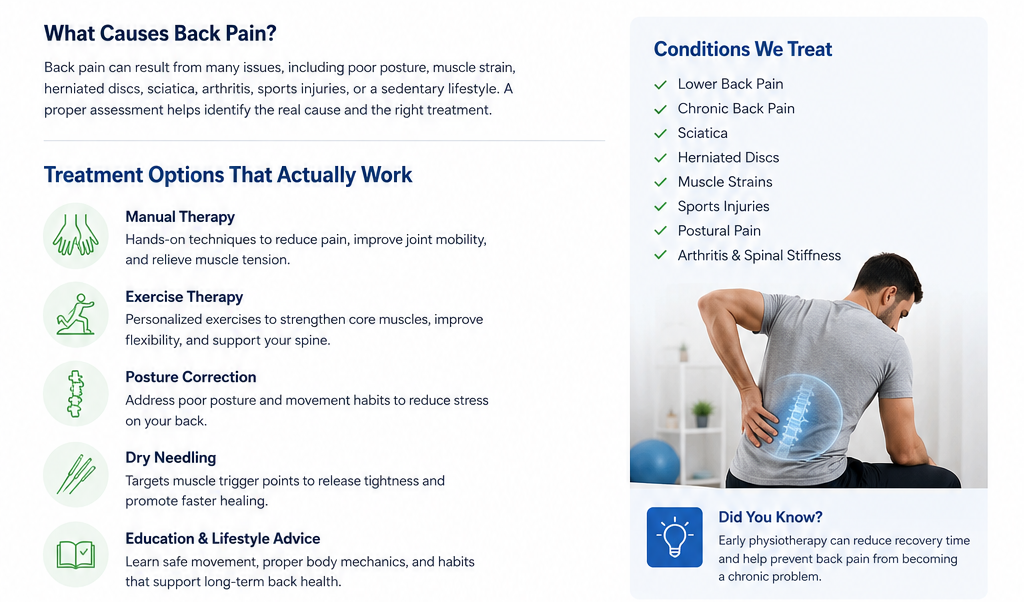
What Causes Back Pain?
Back pain isn’t a single condition it’s a symptom with many possible causes. Understanding the underlying issue helps determine the most effective physiotherapy treatment.
Common causes include:
- Poor posture
- Muscle strain
- Herniated discs
- Sciatica
- Degenerative disc disease
- Arthritis
- Sports injuries
- Workplace injuries
- Sedentary lifestyle
- Weak core muscles
Many people experience recurring back pain because the root cause remains untreated. Physiotherapy focuses on identifying movement dysfunctions rather than simply relieving pain.
Signs You Should See a Physiotherapist
You don’t need to wait until the pain becomes severe.
Consider physiotherapy if you experience:
- Pain lasting longer than one week
- Pain while sitting or standing
- Difficulty bending or twisting
- Pain radiating into the legs
- Numbness or tingling
- Muscle stiffness
- Reduced flexibility
- Frequent recurring pain
- Difficulty walking comfortably
Early treatment often leads to faster recovery and reduces the risk of chronic pain.
How Physiotherapy Helps Back Pain
Unlike medications that temporarily reduce symptoms, physiotherapy treats the underlying cause.
Your physiotherapist typically begins with a comprehensive assessment that includes:
- Medical history
- Pain pattern analysis
- Movement assessment
- Posture evaluation
- Strength testing
- Range of motion testing
- Functional mobility assessment
This information helps develop an individualized rehabilitation plan.
Treatment Options That Actually Work
1. Manual Therapy
Manual therapy involves hands-on techniques designed to improve joint mobility and reduce muscle tightness.
Benefits include:
- Reduced pain
- Improved mobility
- Better spinal movement
- Less muscle tension
- Faster recovery
Manual therapy is often combined with exercise for better long-term results.
2. Personalized Exercise Therapy
Exercise remains one of the strongest evidence-based treatments for back pain.
Your program may include:
- Core strengthening
- Hip mobility
- Flexibility exercises
- Lumbar stabilization
- Balance training
- Functional movement exercises
Exercise programs are adjusted as your condition improves.
3. Posture Correction
Poor posture places unnecessary stress on the spine.
Physiotherapists help improve:
- Sitting posture
- Standing posture
- Lifting mechanics
- Workplace ergonomics
- Sleeping positions
Small changes in posture can significantly reduce recurring pain.
4. Dry Needling
Dry needling targets muscle trigger points that contribute to pain and stiffness.
Potential benefits include:
- Reduced muscle tightness
- Improved circulation
- Faster healing
- Increased mobility
It is commonly used alongside manual therapy and exercise.
5. Education and Lifestyle Advice
One of the biggest advantages of physiotherapy is patient education.
You’ll learn:
- Safe lifting techniques
- Home exercises
- Daily movement habits
- Workplace modifications
- Activity pacing
- Injury prevention strategies
These changes help prevent future episodes of back pain.
6. Strength and Mobility Training
Long-term recovery depends on improving overall body mechanics.
Treatment often focuses on strengthening:
- Core muscles
- Glutes
- Hip stabilizers
- Lower back muscles
Improving flexibility and mobility also reduces stress on the spine.
Conditions Physiotherapy Can Treat
Physiotherapy can help manage many types of back pain, including:
- Acute lower back pain
- Chronic back pain
- Sciatica
- Herniated discs
- Muscle strains
- Ligament injuries
- Postural pain
- Sports injuries
- Pregnancy-related back pain
- Age-related spinal stiffness
Benefits of Physiotherapy for Back Pain
Patients often experience:
- Less pain
- Better flexibility
- Improved posture
- Stronger muscles
- Faster recovery
- Better balance
- Increased mobility
- Reduced dependence on pain medication
- Lower risk of future injuries
- Improved quality of life
What Happens During Your First Visit?
Your first appointment usually includes:
Assessment
Your physiotherapist discusses your symptoms, medical history, and lifestyle.
Physical Examination
This includes movement testing, posture evaluation, flexibility assessment, and strength testing.
Diagnosis
The likely source of pain is identified.
Personalized Treatment Plan
Treatment begins based on your condition and recovery goals.
Home Exercise Program
You’ll receive exercises to continue your recovery between visits.
How Long Does Recovery Take?
Recovery depends on factors such as:
- Cause of pain
- Severity
- Age
- Physical activity level
- Treatment consistency
- Home exercise compliance
Many people notice improvement within several weeks, while chronic conditions may require longer rehabilitation.
Tips to Prevent Future Back Pain
Simple daily habits can make a significant difference:
- Stay active
- Strengthen your core
- Maintain good posture
- Lift properly
- Avoid prolonged sitting
- Stretch regularly
- Maintain a healthy weight
- Sleep on a supportive mattress
- Take movement breaks during work
Consistency is more effective than occasional intense exercise.
Frequently Asked Questions
Is physiotherapy effective for back pain?
Yes. Physiotherapy addresses the underlying cause of back pain through manual therapy, targeted exercises, posture correction, and rehabilitation. Many patients experience improved mobility and reduced pain without surgery.
How many physiotherapy sessions are needed for back pain?
The number of sessions depends on the severity and cause of your condition. Mild cases may improve within a few visits, while chronic or complex conditions often require a longer rehabilitation program.
Can physiotherapy help sciatica?
Yes. Physiotherapy can reduce nerve irritation, improve mobility, strengthen supporting muscles, and decrease recurring symptoms associated with sciatica.
Is exercise better than rest for back pain?
For most cases, gentle movement and guided exercise are more beneficial than prolonged bed rest. A physiotherapist can recommend exercises that are appropriate for your condition.
When should I see a physiotherapist for back pain? You should consider physiotherapy if your pain lasts more than a few days, keeps returning, limits your daily activities, or radiates into your legs.
Take the First Step Toward Recovery. Contact us