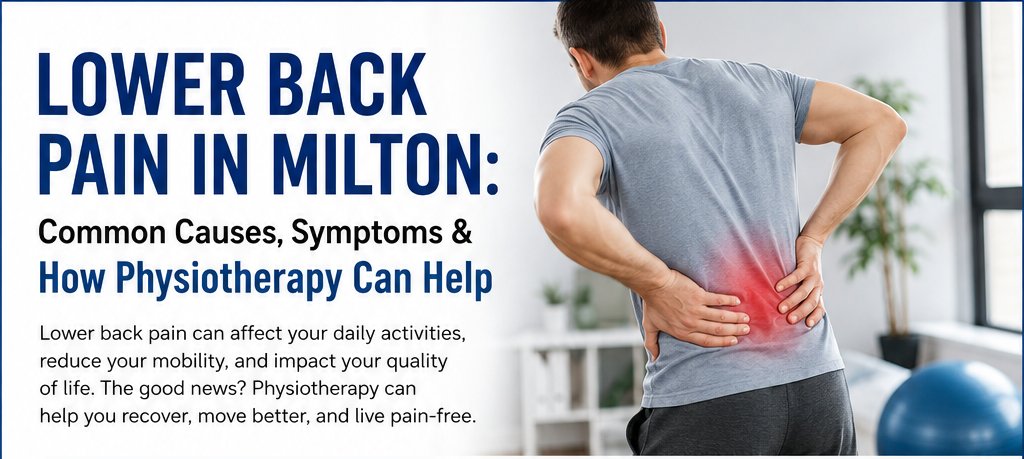
Lower back pain is one of the most common musculoskeletal conditions affecting people of all ages. Whether you’re an office worker, an athlete, a senior, or someone with a physically demanding job, lower back pain can interfere with your daily routine, work performance, and overall quality of life.
If you’re experiencing lower back pain in Milton, understanding its causes and seeking timely physiotherapy treatment can make a significant difference in your recovery. Physiotherapy doesn’t just reduce pain it addresses the underlying cause, restores movement, and helps prevent future episodes.
In this guide, we’ll explore the most common causes, symptoms, treatment options, and how physiotherapy can help you return to a pain-free lifestyle.
What Is Lower Back Pain?
Lower back pain refers to discomfort, stiffness, or pain that occurs in the lumbar region of the spine. The pain may develop suddenly after an injury or gradually over time due to poor posture, repetitive strain, or age-related changes.
Lower back pain can range from mild discomfort to severe pain that limits movement. In some cases, it may radiate into the hips, buttocks, or legs.
Types of Lower Back Pain
Acute Lower Back Pain
- Lasts less than 6 weeks
- Usually caused by muscle strain or sudden injury
- Often improves with conservative treatment
Chronic Lower Back Pain
- Persists for more than 12 weeks
- May result from underlying spinal conditions
- Requires a comprehensive rehabilitation approach
Common Causes of Lower Back Pain
Understanding the root cause is the first step toward effective treatment.
1. Muscle or Ligament Strain
Sudden lifting, twisting, sports injuries, or repetitive movements can overstretch muscles and ligaments in the lower back.
Common signs include:
- Muscle tightness
- Pain with movement
- Reduced flexibility
- Localized tenderness
2. Poor Posture
Many residents in Milton spend long hours sitting at desks or driving.
Poor posture places continuous stress on the spine, eventually leading to:
- Muscle fatigue
- Joint stiffness
- Spinal imbalance
- Chronic lower back discomfort
3. Herniated or Bulging Disc
The discs between your vertebrae act as shock absorbers.
When one becomes damaged, it may press against nearby nerves and cause:
- Sharp lower back pain
- Leg pain (sciatica)
- Tingling
- Numbness
- Weakness
4. Sciatica
Sciatica occurs when the sciatic nerve becomes irritated or compressed.
Symptoms often include:
- Pain radiating down one leg
- Burning sensation
- Numbness
- Difficulty standing for long periods
5. Arthritis
Osteoarthritis and spinal degeneration become more common with age.
These conditions can lead to:
- Joint stiffness
- Reduced mobility
- Morning pain
- Chronic inflammation
6. Sports Injuries
Athletes frequently experience lower back pain due to repetitive movements, improper lifting techniques, or inadequate recovery.
Sports commonly associated include:
- Hockey
- Soccer
- Running
- Weightlifting
- Golf
7. Pregnancy
As the body changes during pregnancy, additional stress is placed on the lumbar spine.
Physiotherapy can safely help manage pain during and after pregnancy.
Common Symptoms of Lower Back Pain
Symptoms vary depending on the underlying cause.
Common symptoms include:
- Dull aching pain
- Sharp or stabbing pain
- Muscle stiffness
- Reduced flexibility
- Pain while bending
- Difficulty standing up
- Pain after sitting
- Muscle spasms
- Radiating leg pain
- Numbness or tingling
When Should You See a Physiotherapist?
While minor discomfort may improve within a few days, you should seek professional assessment if:
- Pain lasts longer than one week
- Pain keeps returning
- Movement becomes difficult
- Pain spreads into the legs
- You experience numbness
- Daily activities become painful
- Exercise becomes difficult
- Sleep is interrupted due to pain
Early treatment often prevents long-term complications.
How Physiotherapy Helps Lower Back Pain
Physiotherapy is one of the most effective non-surgical treatments for lower back pain.
Rather than simply masking symptoms, physiotherapists identify the source of the pain and develop a personalized recovery plan.
Comprehensive Assessment
Your first appointment typically includes:
- Medical history review
- Posture assessment
- Movement screening
- Strength testing
- Flexibility evaluation
- Functional movement analysis
This assessment helps determine the exact cause of your symptoms.
Manual Therapy
Hands-on treatment may include:
- Joint mobilization
- Soft tissue release
- Trigger point therapy
- Myofascial release
Manual therapy helps reduce pain while improving joint mobility.
Therapeutic Exercises
Exercise is the foundation of long-term recovery.
A physiotherapist may prescribe exercises that improve:
- Core stability
- Hip strength
- Flexibility
- Spinal mobility
- Balance
- Functional movement
These exercises help prevent recurring pain.
Posture Correction
Poor posture contributes significantly to chronic lower back pain.
Physiotherapists teach:
- Proper sitting posture
- Standing alignment
- Safe lifting techniques
- Ergonomic workstation setup
- Walking mechanics
Small daily improvements can significantly reduce spinal stress.
Pain Management Techniques
Depending on your condition, treatment may include:
- Heat therapy
- Ice therapy
- Electrical stimulation (TENS)
- Dry needling (where appropriate)
- Stretching programs
These methods help reduce pain and inflammation.
Benefits of Physiotherapy for Lower Back Pain
Patients often experience:
- Reduced pain
- Improved mobility
- Better flexibility
- Increased muscle strength
- Faster recovery
- Reduced inflammation
- Improved posture
- Better balance
- Lower risk of future injury
- Improved quality of life
Tips to Prevent Lower Back Pain
Preventing lower back pain is often easier than treating it.
Stay Active
Regular walking, swimming, or strength training keeps your spine healthy.
Strengthen Your Core
Strong abdominal and back muscles support your spine.
Lift Properly
Always bend your knees rather than your back when lifting heavy objects.
Improve Your Workspace
Use an ergonomic chair and position your computer monitor at eye level.
Maintain a Healthy Weight
Extra body weight increases pressure on the lumbar spine.
Stretch Daily
Simple stretching improves flexibility and reduces stiffness.
Why Choose Physiotherapy for Lower Back Pain in Milton?
Residents in Milton benefit from physiotherapy because treatment is:
- Non-invasive
- Drug-free
- Personalized
- Evidence-based
- Focused on long-term recovery
- Suitable for all ages
Whether your pain began after an injury or developed gradually, physiotherapy helps restore normal movement safely.
Frequently Asked Questions (FAQ)
Can physiotherapy completely cure lower back pain?
Many cases improve significantly with physiotherapy. Success depends on the underlying condition, consistency with treatment, and following a personalized exercise program.
How many physiotherapy sessions will I need?
The number of sessions varies based on your diagnosis, severity of symptoms, and recovery goals. Some people improve within a few visits, while chronic conditions may require a longer rehabilitation plan.
Is walking good for lower back pain?
Yes. Gentle walking can improve circulation, reduce stiffness, and support recovery. However, severe pain should first be assessed by a healthcare professional.
Can sitting too long cause lower back pain?
Yes. Prolonged sitting places stress on the lumbar spine, weakens supporting muscles, and contributes to stiffness. Regular movement breaks and proper posture can help reduce discomfort.
Is lower back pain a sign of a serious problem?
Most cases are related to muscles, joints, or posture and improve with conservative care. However, severe pain accompanied by significant weakness, loss of bladder or bowel control, or numbness in the groin area requires immediate medical attention.
Conclusion
Lower back pain is a common condition, but it doesn’t have to become a long-term problem. Understanding the causes, recognizing early symptoms, and seeking timely physiotherapy can help you recover faster and prevent recurring pain.
If you’re dealing with lower back pain in Milton, a personalized physiotherapy program can help reduce discomfort, improve mobility, strengthen your body, and restore confidence in your daily activities. Taking action early gives you the best opportunity for lasting recovery and a healthier, more active lifestyle.